The Pap of Glencoe
image Welcome
image History
image Gallery
image Contact
Glencoe House circa 1910

A Warm Welcome from Glencoe House

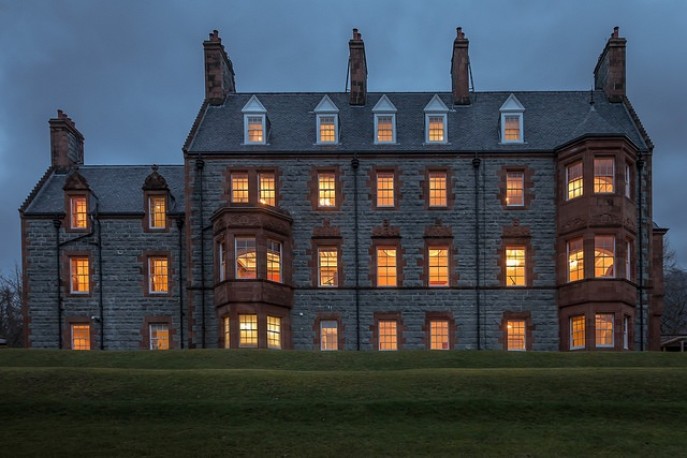
We are currently the proud guardians of this magnificent mansion house, which is, as the name suggests, situated in the famous Glencoe Glen in the Highlands of Scotland.

Glencoe House was built in 1896 and has experienced a number of chapters in its lifetime. Originally commissioned by Donald Alexander Smith, a remarkable man who epitomized the 'rags to riches' story and subsequently, under the custodianship of Donald's daughter, was used as a convalescence home for wounded soldiers in World War Two. This societal function continued as it became a hospital in 1950 as part of the emerging National Health Service. Glencoe Hospital closed its doors to its last patient in 2009 and was subsequently bought in 2011 by Alliance Hotels Consultants Ltd.

We have created this site in order to share the knowledge of the building that we have gleaned through extensive research. At the moment we are restoring the building to its former glory, which is a very satisfying job in itself. We hope to start a new chapter by creating elegant accommodation (subject to planning permission) and thereby offering everyone a chance to experience the wonderful building for themselves.

The site is evolving and developing all the time so please keep an eye on it!

Roger Niemeyer and Judy Pate
Guardians of Glencoe House

Donald Alexander Smith
Lord Strathcona Argyll and Mount Royal in Quebec and Canada

The Early Years and Rise in Eminence

Donald Alexander Smith was born in Forres, Scotland on the 6th August 1820. He entered an era of unprecedented change and ingenuity. From fairly humble beginnings, Donald Smith would become a leading light in the development of Canada and in so doing, become a self made millionaire. In short, he was a remarkable man.

Donald's dreams and ambitions were shaped from an early age by his uncles, Robert and John, who worked in Canada for the Hudson Bay Company. Their tales of adventure and excitement would lure him away from Scotland and his job in Watson's legal firm where he copied legal texts. He joined Hudson Bay Company and left Britain on the 16th May 1838, setting sail with a sense of anticipation, eagerness and hope.

Donald was employed as an apprentice clerk by the Hudson Bay Company, who at that time owned a considerable amount of land in Canada. He was stationed at the trading post of Tadoussac, Quebec, that comprised of no more than an occasional house. It was a severe and demanding landscape which was particularly inhospitable during the winter months and such an experience was to shape Donald's character. His job was to value furs and detail the various transactions in the financial accounts. His talents were apparent to the company and he steadily rose through the ranks: 1855 he managed the district of Esqimaux; 1862 he became Chief Factor; 1871 Chief Commissioner; 1874 Land Commissioner and finally Governor of Hudson Bay Company in 1886.

Creating the Canadian Transcontinental Railway

Arguably one of Donald's greatest feats, however, was beyond the confines of the Hudson Bay Company. Donald Smith was instrumental in the ambitious and bold project of building a pioneering transcontinental railway from Montreal to Vancouver on the Pacific coast. In this colossal venture, Donald was both Director of the syndicate and principal shareholder. His vision and perseverance in this far-sighted endeavour earned him the right to drive in the last spike of the railway line on the 7th November 1885; a ritual that is repeated even to this day, which illustrates the impact of this accomplishment. This railway opened up the North-West of Canada for trade, industry and settlers by reducing the Montreal-Vancouver journey from two weeks to two and a half days.

A Man of Substance

During this time he also became a very shrewd and astute investor and developed a considerable share portfolio. The magnitude of his influence and power was perhaps demonstrated through his directorship of the Bank of Montreal in 1872 and becoming the President of the Bank in 1886. By this stage he was certainly a man of substance and a key figure in Montreal and Canada more broadly. In 1896, however, he was to return to London and the UK in order to take up a post as High Commissioner essentially Canada's representative in the UK, a post he would relinquish only at the age of 90. His lifelong work and his illustrious career was publicly acknowledged in 1895 when he was bestowed the Knight Grand Cross of St Michael and St George. He was also to enter the peerage in 1897, when he became Lord Strathcona in Argyll and Mount Royal in Quebec and Canada.

Donald Alexander Smith: The Man

Unsurprisingly there is a great deal of literature written on Donald Smith's business achievements, which were numerous and also impressive in nature. Care must be taken not to overlook other aspects of his life as his business career demonstrates only one facet of his personality. His philanthropic work was prolific and he gave generously to numerous institutions from Ballachulish & Glencoe Shinty Club to King Edward's Hospital Fund. A series of donations worth noting, as it demonstrates one side of Donald's character, are his donations to McGill University in Montreal. Distinctively, he felt strongly that women should be have the opportunity to participate in higher education and bestowed a $50,000 endowment in 1884 specifically to fund women's education. In fact, he joined the University's board and in 1899 appointed the first female principal, Hilda Oakley, to the University.

We might be forgiven for failing to consider the more personal side of Donald Smith as his achievements seem to overshadow all else. In terms of appearance, an observer, Mr McClintock, in August 1860 commented on Donald's appearance, "he was about forty years old, some five feet ten inches high, with long sandy hair, a bushy red beard and very thick red eyebrows". This very Celtic red colouring would fade into a very distinguished white. He was fastidious in his habits and ate sparingly believing that it maintained an alert and reasoned mind and was the secret to health and long life. He also commented, "I have breakfast at 9am and dinner at 9pm and that gives me eleven hours daily for work". He clearly lived and breathed his work. On his 91st birthday he told reporters of The Times that, "The best way to live to an old age is by not thinking about age at all, but just going on doing your work".

Donald Alexander Smith, Lord Strathcona, died at the age of 93 on the 21st January 1914. Messages of sympathy were sent by many including the King himself. Sir Wilfred Laurier, former Prime minister of Canada perhaps summarised the feelings of many, "I do not think there has been any Canadian whose loss was occasioned so deep and so universal sorrow. He is mourned by His Majesty, by the authorities of commerce and finance in London whose equal he showed himself to be, by the poor of London for his generosity, by the people of Scotland with whom he remained in close relations to the end, and by Canadians, high and low, rich and poor, of whatever race or creed".


Lord and Lady Strathcona

Everything we see and read about Donald Alexander Smith shouts of convention, hard work and moral standing, for example his philanthropic work, even his motto was "perseverance". Arguably, one area that demonstrates a different side to Donald's character was through his relationship with Isabella.

They met while Donald was working in Labrador, Canada in the early 1850s. At this time she was actually married to a cousin of Donalds, John Grant, who married in 1851. The whirlwind romance between Isabella and John, however, was not to last and they, unusual for the time, separated in 1852. It was Isabella who took charge of their son, John. She was repudiated to be a very strong woman who knew her own mind and she had set her sights on Donald Alexander Smith.

Donald and Isabella relationship flourished in 1855 and they had a child, Margaret Charlotte Smith on 17th Jan 1854. They were not actually married at the time, which was scandalous for the era. Donald was a man of principle and so this behaviour is perhaps out of character and demonstrates the strength of love between them. They were married in June 1859 but the question of the legal legitimacy of this ceremony would haunt Donald throughout his life.

Such was his love for Isabella, Glencoe House was to be a grand love letter from Donald to Bella in celebration of their life together. There are many symbols on the building that reflect this, for example their initials DAS and ISS. The separate initials were to demonstrate that Isabella was an individual in her own right, again reinforcing the impact of her character. They enjoyed a long union which was only to be broken on Isabella's death on the 12th November 1913.

The Building of Glencoe House

The pull of Scotland, the place of Donald's birth, would prove strong and it was always his ambition to return to his 'homeland' to build a home for himself, Isabella and also as a legacy for future generations. Donald left Scotland as a man of potential and returned a man of substance.

In 1894 Donald was involved in a land auction in Edinburgh and was successful in his purchase of a considerable amount of land in Glencoe; one of Scotland's most famous glens. It was stated that he paid £13,330 for the 48,000 acre estate, which included slate mines, numerous farms and crofts as well as moorland.

Not long after he purchased the estate, in 1895, he commissioned Sir Robert Rowand Anderson, Scotland's premier architect of the era, to design a new house that would be the jewel in the crown of the estate. Donald's instructions were that the house should commemorate his marriage and provide a Scottish base for future generations; as Donald was 75 years old when he commissioned the house, he anticipated the future use of the building by his daughter and her offspring.

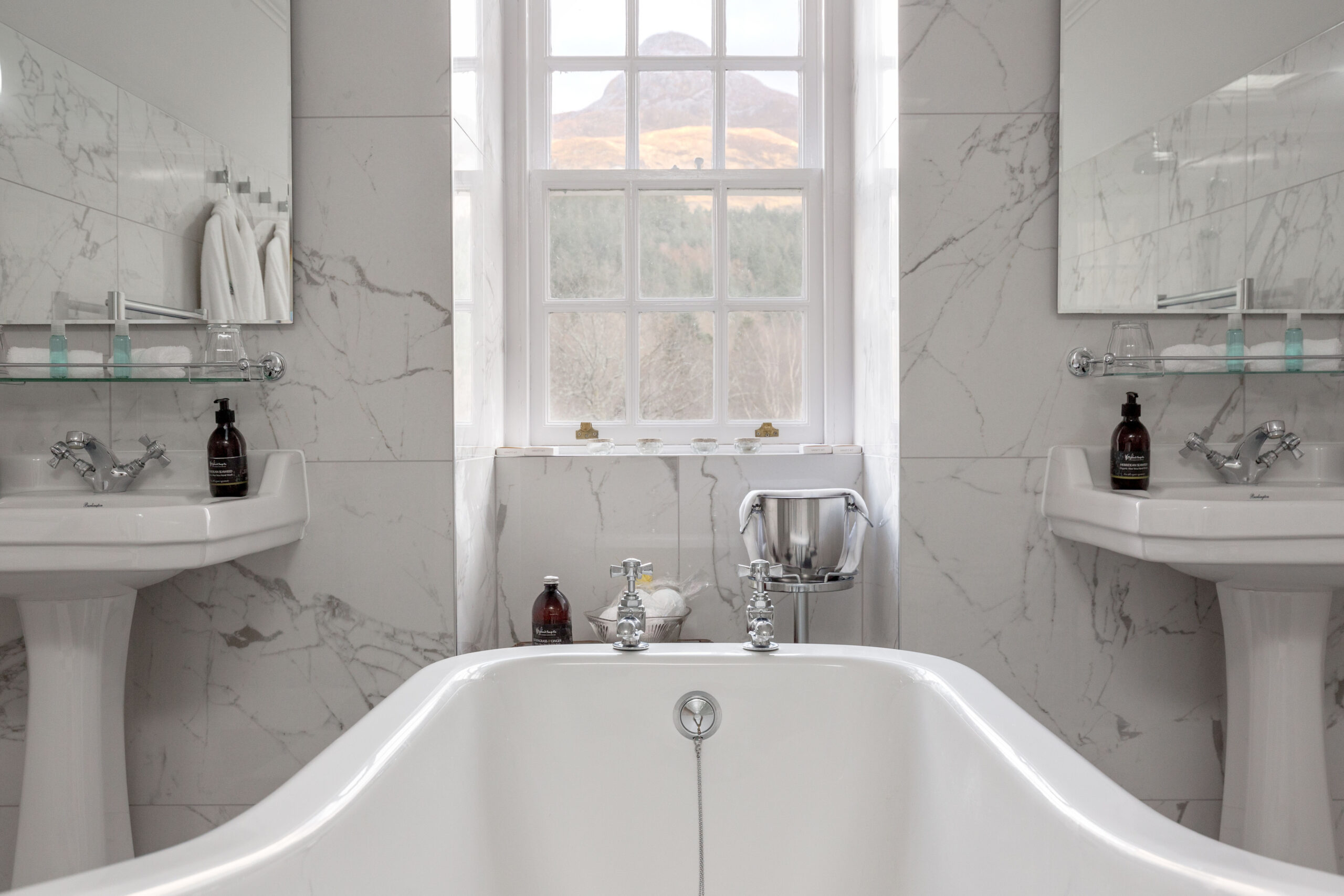
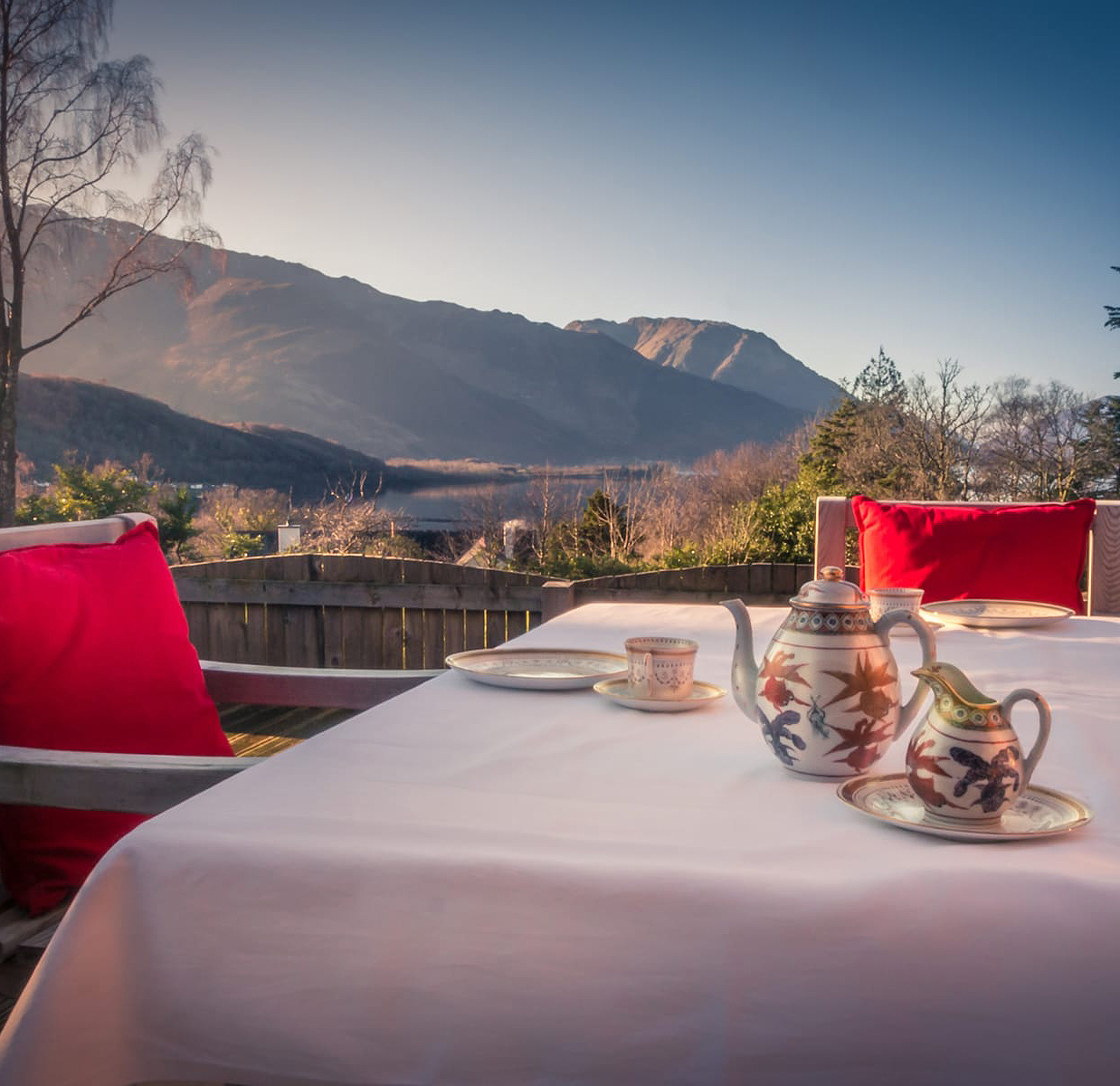
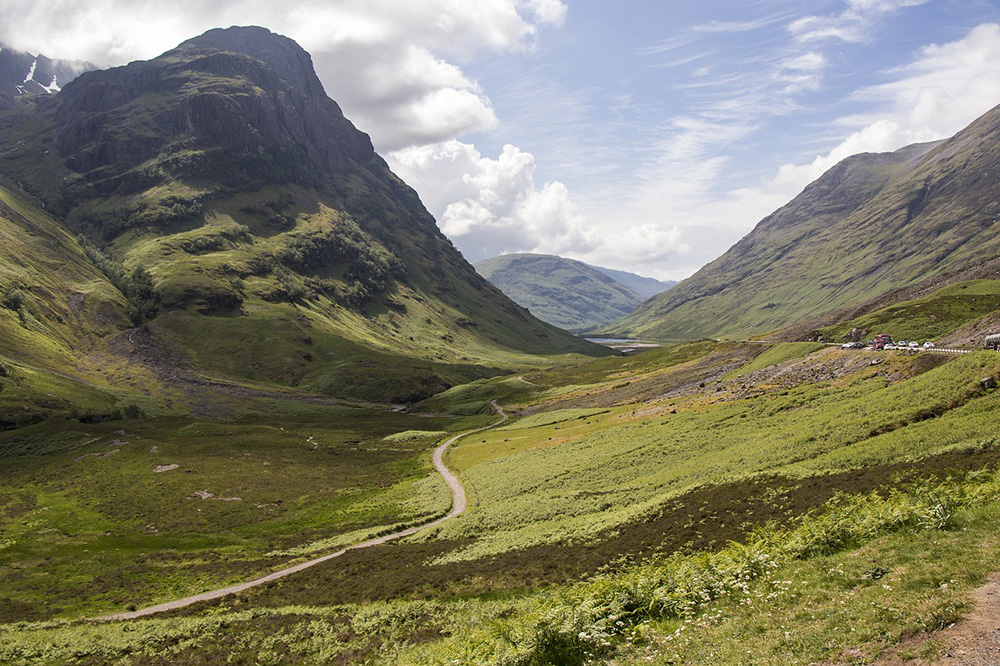
The house held a magnificent position and was to dominate the landscape as it was designed to make the most of the views to Loch Leven on one side and the Pap of Glencoe on the other. The house was built in local granite and dressed with red sandstone. In the external stone work, expert stonemasons carved numerous symbols into the stone. For example, Donald's crest of a Beaver gnawing at the base of a maple tree was fashioned into the stone along with his motto of 'Perseverance'. Donald and Isabella's initials, DAS and ISS (sometimes JSS in Latin) were also carved above some of the windows; the initials were separate and demonstrated that she was an individual in her own right and not merely an extension of her husband, which again underlines the strength of Isabella's character.

The internal features of the building continued the theme of Donald and Isabella's marriage. The ceilings were a particular feature with intricate plaster work comprising thistles, fleurs-de-lis, roses, maple leaves and oak leaves, which were to symbolise the Scottish, English and Canadian heritage of their grand children. There is no doubt that it was built to impress with the elaborate plasterwork, wood carving and a white marble staircase. No expense was spared in the construction of the building and its interior is a testimony to the skilled craftsmen of the era. It was reported to have cost in excess of £30,000 to build. Nonetheless, it is still difficult to overlook the original premise of the building; "the house was a grand love letter from Donald to Bella in celebration of their life together".

In reality the couple were to spend 4-6 weeks a year at Glencoe House with Donald's work tying him to London. Glencoe House was to host numerous family gatherings though. This can be seen in Gwendolen Marjorie Howard's photographs in 1905, and are courtesy of the Osler Library, McGill University, Montreal, Canada. Gwendolen was sister in law to Margaret Charlotte Smith (Donald and Isabella's daughter).


Glencoe House's Architect: Sir Robert Rowand Anderson

Sir Robert Rowand Anderson has been described as 'The Premier Architect of Scotland', designing numerous striking and imposing public buildings. He was even commissioned by King Edward to modify Balmoral Castle. He was widely recognised by his peers of the era as a distinguished and truly talented architect. A.N. Anderson (President of the Institute of Scottish Architects) commented in 1921 that "He was by general admission, the premier architect of Scotland... A great Scot... we honour him; as a great educationalist also, but most of all as a great architect". This indeed was demonstrated by the many honours he was awarded, most notably a Knighthood in 1902 and in 1916 he was presented the Royal Gold Medal, which was the highest accolade from the Royal Institute of British Architects.

Robert Rowand Anderson was born on the 5th April 1835 in Edinburgh. Despite initially following his father into legal practice, he started studying architecture at the Trustees Academy in 1849 before starting as an assistant for George Gilbert Scott in Trafalgar Square, London. He returned to Edinburgh in 1860 where his skill and flair earned him invitations to compete for prestigious tenders, for example the University of Edinburgh's graduation hall and medical school in September 1874; a competition in which he was to ultimately succeed. His most prominent work includes: Holyrood Abbey in 1877; Mount Stuart for the 3rd Marques of Bute in 1878; National Portrait Gallery and Museum of Antiquities, Edinburgh 1884; Glencoe House in 1895; North British Railway hotel in 1895 now known as the Balmoral Hotel, Edinburgh and the Royal residence of Balmoral Castle in 1902.

Vintage Photographs

We've done alot of research into the history of the house since we took it over and have unearthed numerous photos from when it was occupied by Lord Strachcona.

Local Area

Glencoe and the surrounding area is situated amongst the mountains in the Highlands of Scotland and is such a beautiful and scenic part of the country. It attracts visitors from all over the world.

Stonework Details

As mentioned in the history section of this website, Glencoe House was "a grand love letter" to his wife Isabella. Gathered here are some of the details we discovered when restoring the stonework on the exterior of the building.

Contact Us

Do you have any stories about Glencoe House? Or old photographs you'd like to share with us? If so, we'd love to hear from you. This site is still undergoing development so in the mean time you can reach us at the following emails:

Roger Niemeyer: rniemeyer@alliance-hotels.com
Judy Pate: jpate@glencoe-house.com

Glencoe House
Glencoe
PH49 4HT
Scotland